AI Is Not a Monolith
by Kiwi Dillard
Generative artificial intelligence, or more widely known as just, AI, has been a hot topic within the past few years since it's become accessible to the public. You are aware of what AI is, but, do you really know what it is? Why is it that people just referring to generative AI, as simply "AI", is inherently a problem? Before I delve into the topic of generative AI, at different angles within the following months in relation to tech justice, I want to clarify the distinction between generative AI, and symbolic AI. This is not to underestimate the understanding of those who read this, but to make sure we are on the same page, as reader and writer.
Understanding the differences between the various types of AI is a form of digital literacy. Literacy, whether it be reading or media, is an essential key to critical thinking as a skillset in this day of age; and digital literacy takes the comprehensive principles of this, applying it to the social interactions and informational exchanges that make up the internet. In a zeitgeist of misinformed and anti-intellectual culture wars, it is no surprise that a subject such as artificial intelligence lacks nuance, while simultaneously, isn't often taught. What is most infuriating is seeing that many people who participate in the discourse surrounding AI are often unaware of the different types of it; leading them to conflate generative AI and symbolic AI with one another, overall impacting their uninformed takes.
To be straightforward, AI has always been a part of the daily lives of U.S. citizens since computer labs were introduced to schools in the 1980's. We use AI everyday. So what’s the big issue? What is the difference between generative AI and symbolic AI? Something that needs to be made clear, is the differences between the "good old-fashioned" AI we’ve used for decades, and the "large language model" AI that is emerging now. Examples of the symbolic AI we’ve used for decades are websites, social media platforms, search engines, photo and video editing softwares, digital audio workstations, spreadsheet programs, word processors, autosave, data servers, language translators, closed captions, text-to-speech, etc. Down to the very user interface you’re using to be able to read this. Somewhere down the line, machine learning was introduced to the public for us to have things like predictive text and recommendation algorithms; but what is the difference between these types of AI, and generative AI? Unlike anything we’ve seen before, generative AI is a form of machine learning in which programs such as Chat GPT, DALL-E, Midjourney, Stable Diffusion, etc. are trained on data scraped from the internet, copyrighted or not.
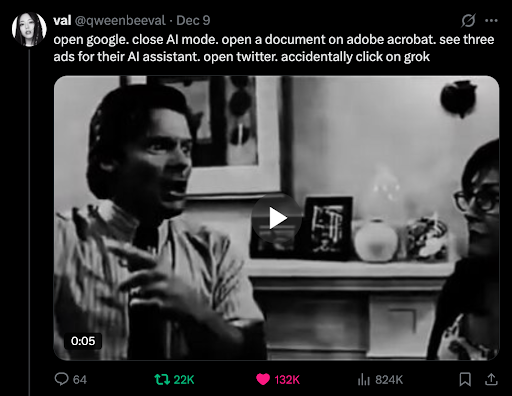
As generative AI has slowly started to be incorporated as features into these websites we visit everyday, it has been trained on data from ordinary citizens. This means that yes, everything you have ever seen posted onto social media platforms and forum websites; including anything you've ever posted yourself, has been fed into generative AI programs to be trained on without your, or anyone's consent. Every TikTok "AI style" filter, every Instagram chat bot, Snapchat's "My" AI bot, Twitter's Grok, DeviantArt's DreamUp, Microsoft's Copilot, Google's Gemini, the AI overview pops up above every Google search results, and more, have all been trained on this data.
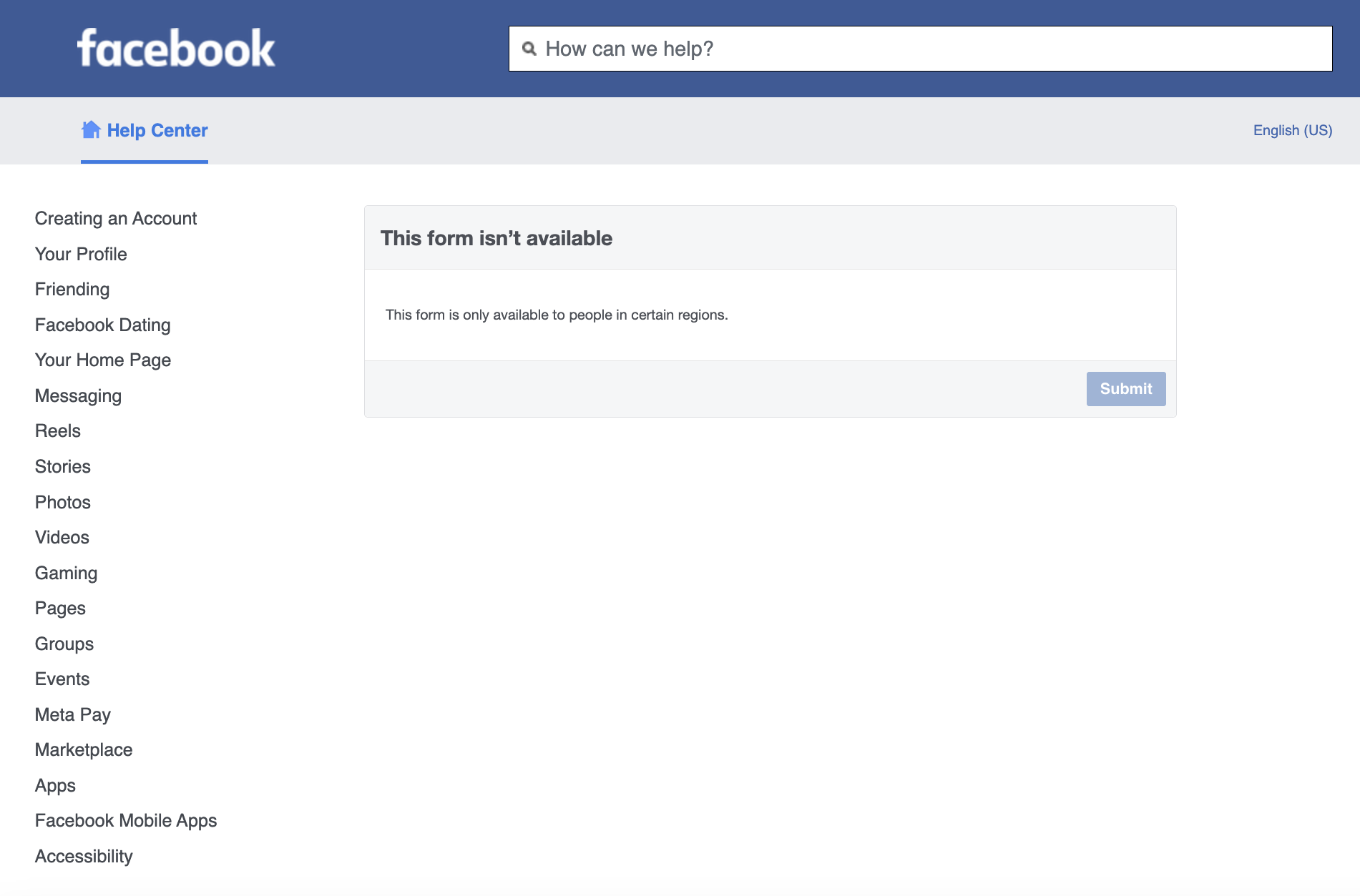
This is what happened two years ago, when I watched my right to say no be withheld from me, after Meta had officially announced that they were going to use anything and everything we had ever posted on Instagram and Facebook to train their new generative AI model, the Large Language Model Meta AI (Llama.) I was unable to opt out of my likeness and shared moments being used to train Meta's in-progress generative AI program, and was forced to watch as my face and memories no longer belonged to me. I never understood the saying, “if you're getting something for free, you're the product.", I heard so many times when I was younger, until I got older. This weighs on my consciousness everyday, and because of this, for the past few years, I just have increasingly lacked the motivation to log into mainstream social media platforms.
I want to make a point that I am chronically online, and given how the internet was once my safe haven as a trans child without a place to belong in the real world, it is ironic that now as an adult, I deal with what I now jokingly call my "AI fatigue." Everytime I log in, just like cockroaches that keep coming back, there’s always some sort of pushy pop-up I can’t ever entirely get rid of; giving me a grim reminder. I am constantly met with the dilemma of either getting rid of the only way to keep in touch with my friends across the world, or protecting what little privacy of mine I have left. I should never have to choose between the two. Never have I ever thought that I would witness the death of the internet, nor the dead internet theory in real time. Something that I'd argue began with the discontinuation of Adobe Flash, or even further back, the bleak flat "minimalistic" UI design trend that spread online like the plague. This is our modern-day equivalent of the burning of the Library of Alexandria; it is because of techno-fascism under the guise of technological advancement, and it starts with enshittification being more profitable to corporations that co-opted the abbreviation "AI."
Many of those in positions of power who are establishing the policies and regulations for generative AI right now, do not actually know the difference between the various kinds of AI, nor are they educated enough to understand the ramifications of what they are endorsing. The talking point that generative AI is for the greater good, in defense of societal progress, if often parroted with misconception. When in reality, one cannot reasonably argue that generative AI is beneficial to our society without understanding the nuance in which the foundation of its framework was created. Theft. And this doesn't even include the ethical welfare and environmental ramifications of generative AI that we have witnessed in the previous four years, negating any remaining hypothetical benefits. To pretend otherwise is to dismiss the exploitation of those who had been stolen from, which many who argue in favor of generative AI, forget are everyday people. The very people who are the reason as to why generative Al is capable of these replications to begin with, because these models were trained on datasets consisting of imagery and text alike, sourced from the internet without anyone's consent. Including yours.
So with this knowledge, I encourage those who read this to always be curious, seek out what they do not know, and to ultimately do their own research; look into what forms of artificial intelligence are used for the features of the applications and programs that you use everyday. Go down a rabbit hole! Learn what they are, what they do, what they’re for, etc. Due to the increasing normalization of generative AI through marketing, many tech companies do not explicitly disclose that they utilize generative AI in their products. Nor do they make a clear distinction between which of their products rely on generative AI, and which do not; in consideration of consumers who simply want a choice.